
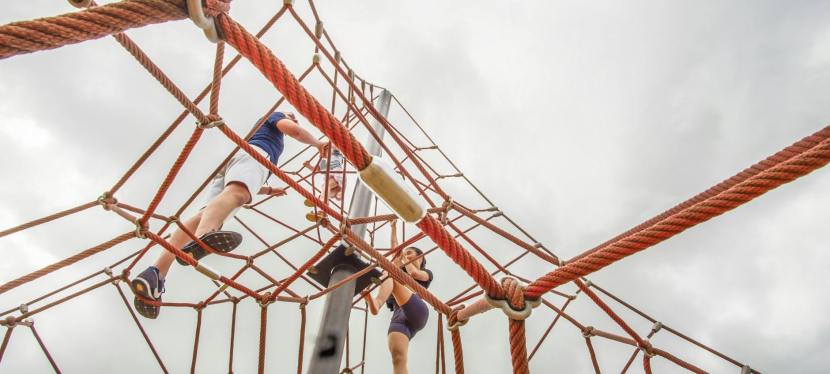
Playgrounds are key environments where children learn, grow, and explore. Climbing structures, in particular, are more than just fun. They provide excellent opportunities to support sensory processing, which is vital for child development. Sensory processing refers to the way the brain interprets and responds to sensory information from the body and environment.
Climbing activities on playgrounds integrate multiple sensory systems, helping children enhance their motor coordination, body awareness, and so much more. Here’s a closer look at why playground climbing is great for sensory processing.

Strengthening Motor Skills Through Movement
Climbing engages a child’s entire body, making it a full-body workout that is excellent for gross motor skill development. Scaling structures like climbing walls or rope ladders challenges muscle groups in the arms, legs, and core.
Children also learn to coordinate these movements with precision, improving overall balance and agility. For kids working through developmental delays, this type of movement can help them catch up to milestones faster. Beyond that, frequent climbing builds stamina and physical strength, which are essential for accomplishing more intricate motor skills.
Balancing the Vestibular System
The vestibular system plays a key role in balance and spatial orientation, and climbing stimulates it in unique ways. Activities like scaling a rock wall or navigating monkey bars require children to adjust their posture, shift their weight, and move their head in different directions.
Such movements provide valuable vestibular input, which helps kids sharpen their ability to maintain balance in different environments. With stronger vestibular function, children gain better control over their bodies, reducing clumsiness while boosting confidence in physical tasks.
Supporting Proprioceptive Development
Proprioception, often referred to as the body awareness sense, is the ability to understand body position and movement without looking. Playground climbing provides invaluable proprioceptive input as kids pull, push, grip, and hang from climbing structures. For example, when climbing a cargo net, a child learns exactly how much pressure to apply with their hands and feet.
This awareness of their body’s placement enhances coordination and fosters smoother, more intuitive movement over time. These proprioceptive activities are also immensely calming for children who experience sensory overload, which makes climbing a great self-regulation tool.
Encouraging Tactile Exploration
Playground climbing equipment introduces children to a wide range of tactile inputs. Textured grips on climbing walls, smooth metal bars, and soft ropes all provide unique sensory experiences. By interacting with these surfaces, kids improve their tactile processing, which helps them distinguish textures more effectively in daily life.
The tactile aspect of climbing is especially beneficial for children with tactile defensiveness, as it allows them to adapt to new sensations in an engaging, non-threatening way. Incorporating playground accessories for sensory play, such as textured climbing grips or multifunctional panels, enriches these experiences even further.
Through playground climbing, children build physical strength and vital sensory processing skills that serve them in all areas of life. From boosting motor skills and proprioception to refining balance and tactile processing, climbing helps kids develop in well-rounded and meaningful ways.

 Mom on the go in Holy Toledo