
Mormon History in Ohio
The early history of The Church of Jesus Christ of Latter-day Saints, also called the Mormon or LDS Church, in Ohio is a pivotal chapter in the larger narrative of Mormonism. Between 1831 and 1838, Ohio served as the headquarters for the new church, witnessing significant developments that would shape its future.
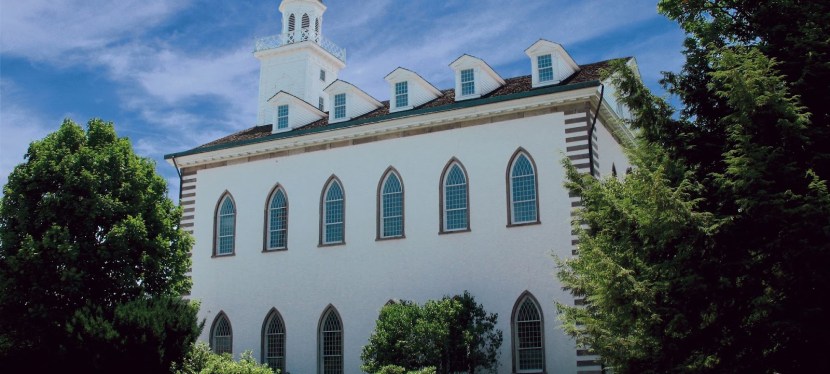
Kirtland Temple

Kirtland: The First Headquarters
Joseph Smith, the founder of the Mormon Church, was from New York, but after claiming to have received heavenly visions and translating an ancient American scriptural record, he experienced a lot of antagonism. In December 1830, Smith received a revelation that directed church members to gather in Ohio. Ohio would become the focal point for Mormon activity. By early 1831, Joseph Smith and other church leaders had relocated to Kirtland, Ohio, a small town near Cleveland. This move marked the beginning of Ohio’s central role in the early church.
Kirtland quickly became the first headquarters of the church. This period was characterized by rapid growth and significant organizational developments. Joseph Smith and his followers established several key institutions, including the School of the Prophets, a theological seminary aimed at educating church leaders. The school fostered a sense of unity and doctrinal understanding among the early church’s leadership. This is also the place where most Mormon historians believe that Joseph Smith received his revelation about polygamy. In Kirtland, the first of Joseph Smith’s wives was probably Fanny Alger.
The Kirtland Temple
One of the most enduring legacies of the church’s time in Ohio is the construction of the Kirtland Temple. Completed in 1836, it was the first temple built by the LDS Church and remains a symbol of the early church’s dedication and sacrifice. The construction of the temple required significant financial and physical resources from the church’s members, many of whom were already struggling economically.
The Kirtland Temple was not only a physical structure but also a spiritual beacon. It was the site of several important events, including the dedication ceremony on March 27, 1836. During this ceremony, many attendees reported experiencing profound spiritual manifestations, including visions and the appearance of angels. These events reinforced the faith of the early members and solidified Kirtland’s place in church history.
Newel K. Whitney Store

Economic Ventures and Challenges
The church’s time in Ohio was marked by both spiritual growth and economic challenges. The establishment of the Kirtland Safety Society, an early banking institution, was one of the church’s most ambitious economic ventures. Founded in 1837, the society aimed to provide financial stability and support for the growing community. However, it faced significant challenges, including a lack of legal charter and widespread economic instability in the United States.
The failure of the Kirtland Safety Society had profound repercussions for the church and its members. Many church members lost their savings, and the financial crisis led to widespread dissent and disillusionment. Joseph Smith and other church leaders faced significant opposition, culminating in a period of intense conflict within the church community. This and other struggles like learning about Joseph Smith’s polygamy lost their faith in Smith as a prophet.
Doctrinal Developments
The years in Ohio were also a time of significant doctrinal development for the LDS Church. During this period, Joseph Smith received numerous revelations that would become foundational to Mormon theology. Among these were revelations concerning the nature of God, the organization of the priesthood, and the practice of communal living known as the United Order.
One of the most notable doctrinal developments was the introduction of the Word of Wisdom, a health code that prohibits the consumption of alcohol, tobacco, and some hot drinks. It encourages the consumption of grains, fruits, and herbs. This revelation, received in 1833, remains a distinctive aspect of Mormon practice today.
Internal Conflict and Schism
The economic difficulties and resulting financial losses led to internal conflict within the church. Prominent members, including Warren Parrish and others, openly criticized Joseph Smith’s leadership, accusing him of financial mismanagement and other improprieties. This dissent led to a schism, with a significant number (maybe 10 to 15 percent) of members breaking away from the main body of the church.
The dissent reached a peak in 1837-1838, with an outbreak of violence and legal battles. Joseph Smith and Sidney Rigdon, another key church leader, were forced to flee Kirtland for their safety, relocating to Far West, Missouri. This move marked the end of Kirtland’s role as the church’s headquarters. To read more about the financial or other struggles of the early church in Kirtland, visit Mormonism Explained.
Legacy and Impact
Despite the challenges and eventual departure of the church’s leadership, the legacy of the LDS Church’s time in Ohio remains significant. The Kirtland Temple stands as a testament to the early church’s dedication and faith. It was owned by the Community of Christ (formerly the Reorganized Church of Jesus Christ of Latter-Day Saints), a church started by Joseph Smith III, Joseph Smith’s son. However, in 2024, the Mormon Church bought the Kirtland Temple from the Community of Christ. It serves as a historical site and can be visited by anyone wishing to see it. In addition to the Kirtland Temple, there are other buildings from the early days of Mormonism, like the Newel K. Whitney Store or the original sawmill, that people can visit.
The experiences in Ohio also had a lasting impact on the development of the LDS Church’s organizational structure and doctrinal foundation. The challenges faced and overcome during this period helped to solidify the church’s leadership and prepared the community for future trials.
Conclusion
The history of Mormonism in Ohio is a story of faith, dedication, and resilience. It was a time of both great achievement and significant hardship. The early members of the LDS Church demonstrated a remarkable commitment to their faith, building lasting institutions and enduring severe trials. The lessons learned and the foundations laid during these formative years in Ohio continue to influence the Mormon Church to this day. The legacy of Kirtland, with its temple and the revelations received there, remains a cornerstone of Mormon history and a source of inspiration for millions of church members worldwide.

 Mom on the go in Holy Toledo