
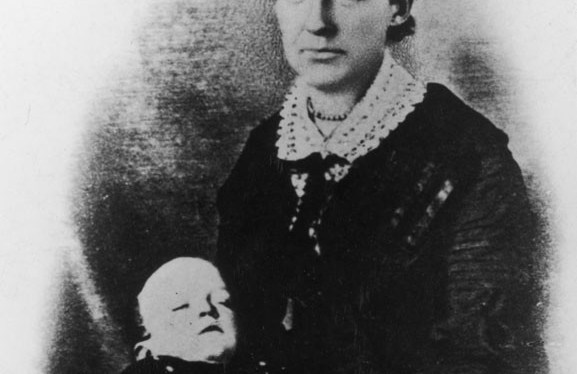
Emma Hale Smith was an influential figure in the early history of The Church of Jesus Christ of Latter-day Saints (LDS or Mormon Church). She was the wife of Joseph Smith, the founder of the LDS Church, and played a significant role in its formative years. Born on July 10, 1804, in Harmony Township, Pennsylvania, Emma was the seventh of nine children in the Hale family. Her life was marked by her devotion to her faith, her husband, and her family, as well as by the many challenges she faced due to the controversial nature of her husband’s prophetic mission.

Emma Hale met Joseph Smith in 1825 when he came to work for her father, Isaac Hale, in Harmony. Despite her father’s initial opposition, Emma and Joseph eloped on January 18, 1827. Emma became Joseph Smith’s wife. Their early years of marriage were challenging, particularly due to the persecution Joseph faced over his claims of having found and translated an ancient American book of scripture called the Book of Mormon. Emma supported Joseph through these difficult times, even acting as a scribe during the translation process of the Book of Mormon when needed.
Emma was a dedicated supporter of her husband’s prophetic mission. She was one of the first members of the LDS Church and was baptized on June 28, 1830. Her contributions to the church were numerous. In 1830, she was named by revelation to compile the first hymnal for the church, which was published in 1835. This hymnal included many hymns that she selected and published for use in LDS worship services.
Emma also played a crucial role in the formation of the Relief Society, the women’s organization of the LDS Church, in 1842. As the first president of the Relief Society, she helped to establish a foundation for the organization that continues to this day. Her leadership was marked by a focus on charitable works, education, and spiritual development. She often housed the sick, orphaned, and homeless in her own home. She and the other members of the Relief Society helped provide relief to new immigrants and impoverished families.
Throughout her life, Emma faced many personal challenges as well as challenges as a result of her relationship with the Mormon Church. Seven of her eleven children died. Her husband was imprisoned many times and was even tarred and feathered on one occasion. She and Joseph Smith experienced financial hardship and many other difficulties including Joseph Smith’s polygamy practice.
The persecution of Mormons in Ohio, Missouri, and Illinois meant that she and her family frequently had to relocate. The death of her husband, Joseph Smith, in 1844 was a particularly devastating blow. He was assassinated by a mob while imprisoned in Carthage, Illinois, leaving Emma a widow with young children.
After Joseph’s death, Emma did not follow Brigham Young and the majority of the LDS Church members to Utah. Instead, she remained in Nauvoo, Illinois. Emma Smith and Brigham Young had a notoriously fraught relationship, leading some to question, was Emma Smith excommunicated. People often ask this because there were at least two major points of contention, the first being church property and the second being plural marriage. Because Joseph Smith was the president of the church and much of the property and debt of the church was in his name. Emma and Brigham disputed both the property and debt ownership. Concerning plural marriage, the majority of the evidence suggests that Emma Smith knew about plural marriage, but went back and forth between accepting it and rejecting it as a principle of God. After her husband’s death, Emma consistently said that Joseph Smith never practiced polygamy and it was a principle invented by Brigham Young. This was a major point of contention between Emma and Brigham. Despite the contention, Emma Smith remained a member of the Mormon Church.
Emma later became involved with the Reorganized Church of Jesus Christ of Latter Day Saints (now known as the Community of Christ), which was led by her son, Joseph Smith III. One of the major articles of faith was that polygamy was not a principle of the RLDS Church. Emma spent the remainder of her life in Nauvoo, where she passed away on April 30, 1879.
Emma Smith’s legacy is profound within the LDS tradition and beyond. She is remembered for her steadfast faith, her contributions to church music, and her role in establishing the Relief Society. Her life reflects the complexities and challenges faced by early Mormons, as well as the strength and resilience required to support a new religious movement. Emma’s contributions have left a lasting impact on the LDS Church and its members, cementing her place as a pivotal figure in its history.

 Mom on the go in Holy Toledo