Let’s talk about a pressing issue in schools today, disrespect in the classroom.
Here’s the thing: it didn’t happen overnight. It’s like the story of the frog placed in cool water that’s slowly brought to a boil, the change happens so gradually that no one notices until it’s too late. Over time, our society has subtly shifted in ways that have reshaped how children learn respect, patience, and social awareness.
One of the biggest influences? Convenience.
In today’s fast-paced world, parents are busier than ever, juggling demanding jobs, overscheduled children, and for many, the challenges of single parenthood. This isn’t about judgment; it’s about recognition. Life is hard, and convenience has become a lifeline for survival. But with that convenience has come an unintended consequence: the slow erosion of opportunities for children to learn social etiquette and respect through real-world experiences.
There was a time when children naturally absorbed social cues from daily life, grocery shopping with a parent, visiting the library, running errands, or dining out as a family. Through these moments, they learned how to greet people politely, when to speak and when to listen, how to hold a door open, or how to behave respectfully in public.
Fast forward to today, and those experiences have largely been replaced by modern conveniences. Many errands can now be done with a click. And when parents do bring children along, screens often serve as pacifiers, keeping kids quiet and entertained while the adult handles the task.
But here’s the problem: we’re skipping the hard work when they’re little.
Every parent knows that taking a toddler to a restaurant can be exhausting. They squirm, they protest, they test limits, and yes, it can be embarrassing. But those difficult moments are vital. They’re where children learn patience, self-control, and awareness of others. When we avoid those challenges, we unintentionally deprive children of critical learning experiences that shape their behavior later in life.
Fast forward again, to the classroom.
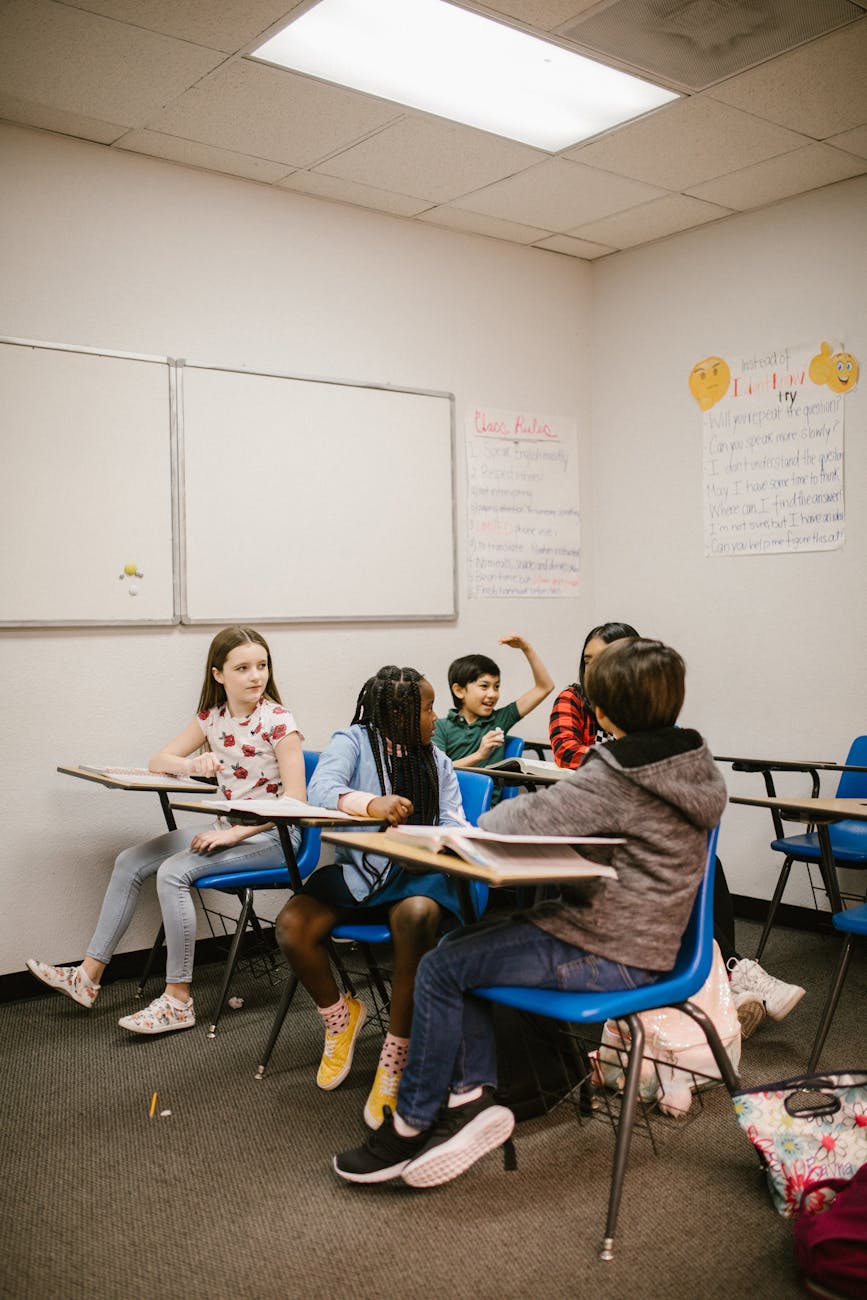
Now, teachers face the fallout of those missing lessons. Classrooms are filled with students who struggle to sit still, regulate emotions, and engage respectfully. In fact, research confirms that the most common disruptive classroom behaviors include “talking out of turn, non-attentiveness, idleness, and disrespecting teachers through rudeness and disobedience” (Sun & Shek, 2012). These patterns are no longer isolated incidents, they’re widespread, and they’re eroding the learning environment for everyone.
Many children, used to constant stimulation and instant gratification, find it difficult to function without a screen. When schools lock away phones during the day, students who have been malnourished of real attention and human connection suddenly feel that absence acutely. A recent study published in JAMA Network Open found that children who spent more than two hours of daily screen time exhibited lower psychological well-being and social functioning, particularly among younger age groups (Kwon et al., 2024). This data reinforces what teachers experience daily—students who struggle to self-regulate, connect, and communicate without digital mediation.
The result? Teachers are parenting in the classroom. They’re guiding students who, through no fault of their own, are lagging developmentally in self-control, emotional regulation, communication, and empathy.
So, what’s the solution?
Honestly, there’s no simple answer. Many parents are exhausted, working long hours, maintaining households, and trying to be present with whatever energy remains. You can’t pour from an empty cup. But maybe we start small.
What if we made a collective effort to create one intentional outing per week between parent and child? It doesn’t have to be elaborate, an hour at the library, a walk through the park, a shared grocery trip. Use these moments to teach what it means to be part of a community: how to share space, respect others, and engage with kindness.
And what if each month, families focused on one simple theme?
- November: Staying in your own lane, understanding personal responsibility.
- December: Leadership vs. following, how to make thoughtful choices.
- January: Gratitude, how appreciation shapes perspective.
Small, intentional steps can ripple outward in powerful ways.
The truth is, respect begins long before the classroom. It begins in the everyday moments of life, the unfiltered, inconvenient, sometimes chaotic ones. If we reclaim those spaces, we just might reclaim the civility and empathy our classrooms, and our society, so deeply need.
Sources
Sun, R. C. F., & Shek, D. T. L. (2012). Student Classroom Misbehavior: An Exploratory Study Based on Teachers’ Perceptions. The Scientific World Journal, 2012, Article 208907. https://doi.org/10.1100/2012/208907
Kwon, S., Chang, S., & Suh, D. (2024). Screen Time, Sociodemographic Factors, and Psychological Well-Being Among Young Children in the U.S. JAMA Network Open, 7(2), e2415689. https://jamanetwork.com/journals/jamanetworkopen/fullarticle/2815689

 Mom on the go in Holy Toledo