Getting kids interested in recycling can be tricky when they don’t understand why it matters. You might remind them to use the proper bin, only to find that they’re still throwing reusable materials in the trash. Instead of making it another household rule to follow, you can turn the experience into something they genuinely enjoy. These creative ways to teach kids about recycling at home will help you build good habits through activities your family can enjoy together.
1. Create Art From Household Packaging
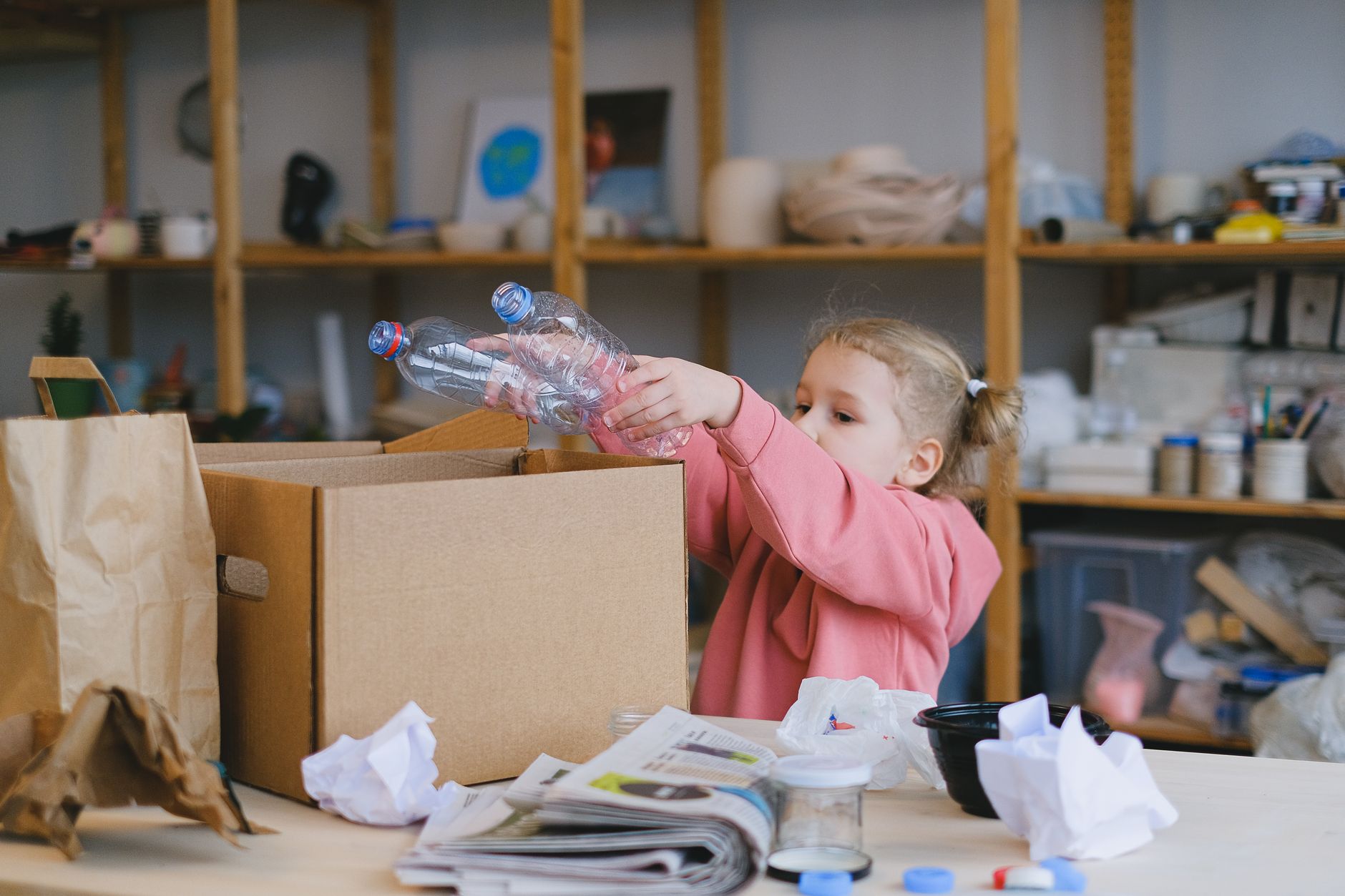
You probably have plenty of materials for your next craft project sitting in your recycling bin right now. Instead of buying materials for another afternoon project, invite your kids to choose something clean that they can turn into artwork.
Kids can turn cardboard boxes into entirely new creations with a little cutting and decorating. Give your child room to experiment rather than expecting a perfect finished product. You may find that their ideas are much more imaginative than anything you would’ve planned.
Encourage Creative Problem-Solving
Try asking your child what they could make from an empty container without suggesting an answer. They might see a toy house where you see an ordinary cardboard box.
When children come up with their own projects, they begin to see new possibilities in everyday objects. You’ll also have a natural opportunity to explain why reusing something can sometimes make more sense than immediately throwing it away.
2. Give Egg Cartons Another Purpose
Empty egg cartons work well for creative projects because kids can use each compartment in a different way. Instead of throwing away a clean carton, encourage your kids to think of something they could make with it.
Younger children might enjoy turning individual compartments into colorful pretend creatures. Older kids could use sections of a carton to create a miniature garden scene. You can also find more creative ways to repurpose egg cartons that encourage kids to make something new from familiar materials.
Talk About Reuse Versus Recycling
As your kids work on their projects, explain that reusing something gives it another purpose without changing the original material. Recycling, on the other hand, involves processing materials to make new products. Ask your children to think about other household items they could use again instead of throwing them away. This helps them recognize opportunities to reduce waste through everyday decisions.
3. Organize a Family Recycling Challenge
Sometimes children need a little motivation to turn a new idea into a regular habit. A family recycling challenge can make everyday sorting more engaging without putting pressure on anyone to win.
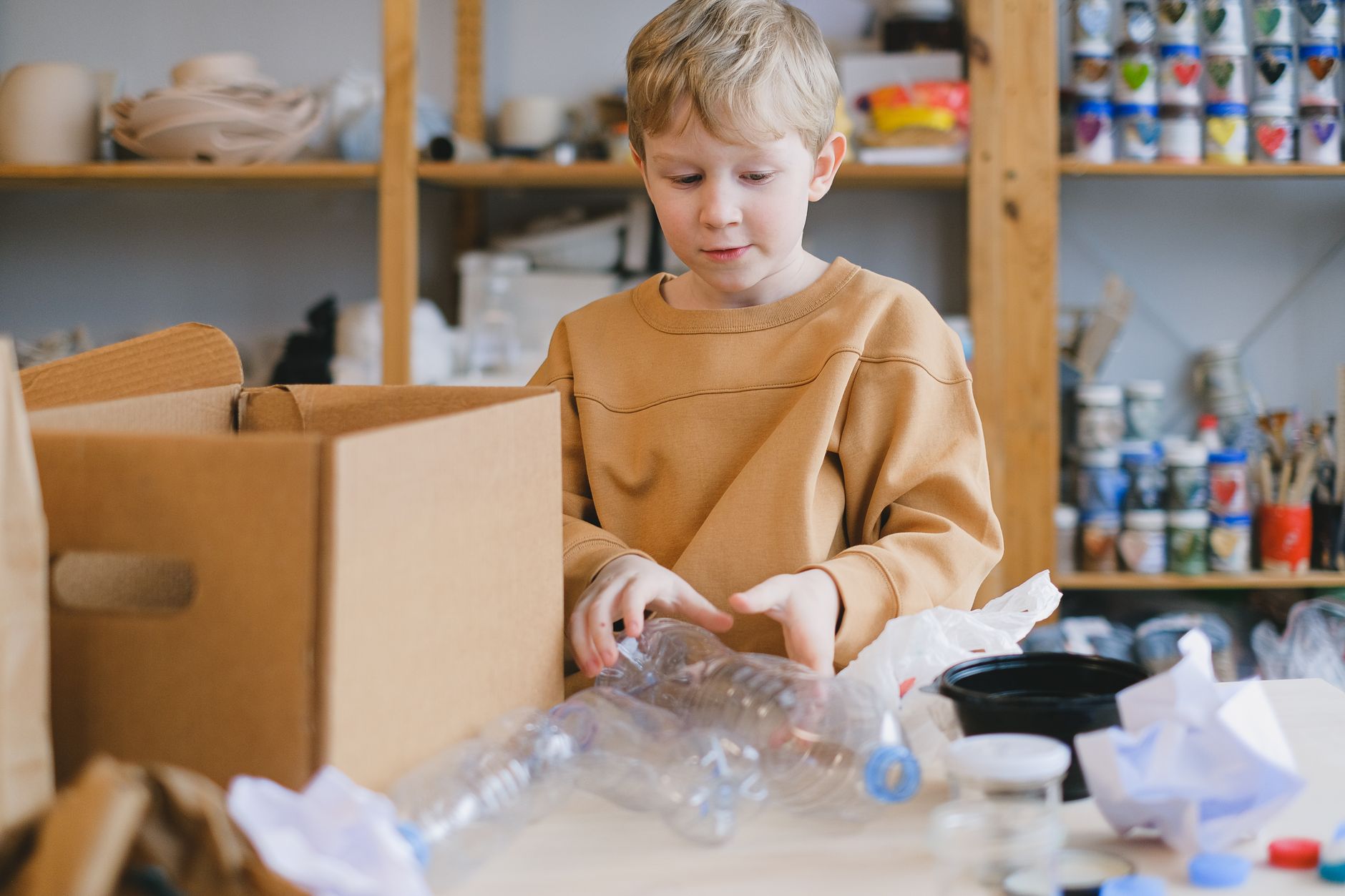
Choose a manageable goal that everyone can work toward during the week. For example, challenge everyone to sort recyclable packaging correctly after meals throughout the week.
Celebrate Thoughtful Decisions
At the end of the week, ask your kids what they noticed while sorting household materials. Ask your kids which items left them confused and what they would do differently next time.
You can also use a simple chart to track everyone’s progress throughout the week. Keep the emphasis on making thoughtful choices rather than collecting unnecessary packaging.
4. Set Up a Reuse Treasure Box
Kids might overlook everyday packaging that could become useful craft supplies. A reuse treasure box gives them somewhere to save clean materials for future craft projects.
Choose a container that fits comfortably in your craft area. Then invite your children to contribute clean items that might be useful for their next project.
A few simple guidelines can help you keep the collection safe and manageable, such as:
- Saving only clean, dry materials
- Avoiding sharp containers or broken pieces
- Checking packaging for leftover food
- Keeping small parts away from younger children
- Removing materials that nobody uses
Let Kids Manage Their Collection
Once you’ve established basic safety rules, encourage your children to decide what deserves space in the box. If it gets too full, ask them to decide which materials they want to keep for upcoming projects.
You’ll help them understand that responsible reuse doesn’t mean keeping everything forever. If they no longer need something, help them decide whether it belongs in the recycling bin or the trash.
5. Practice Recycling During Grocery Unpacking
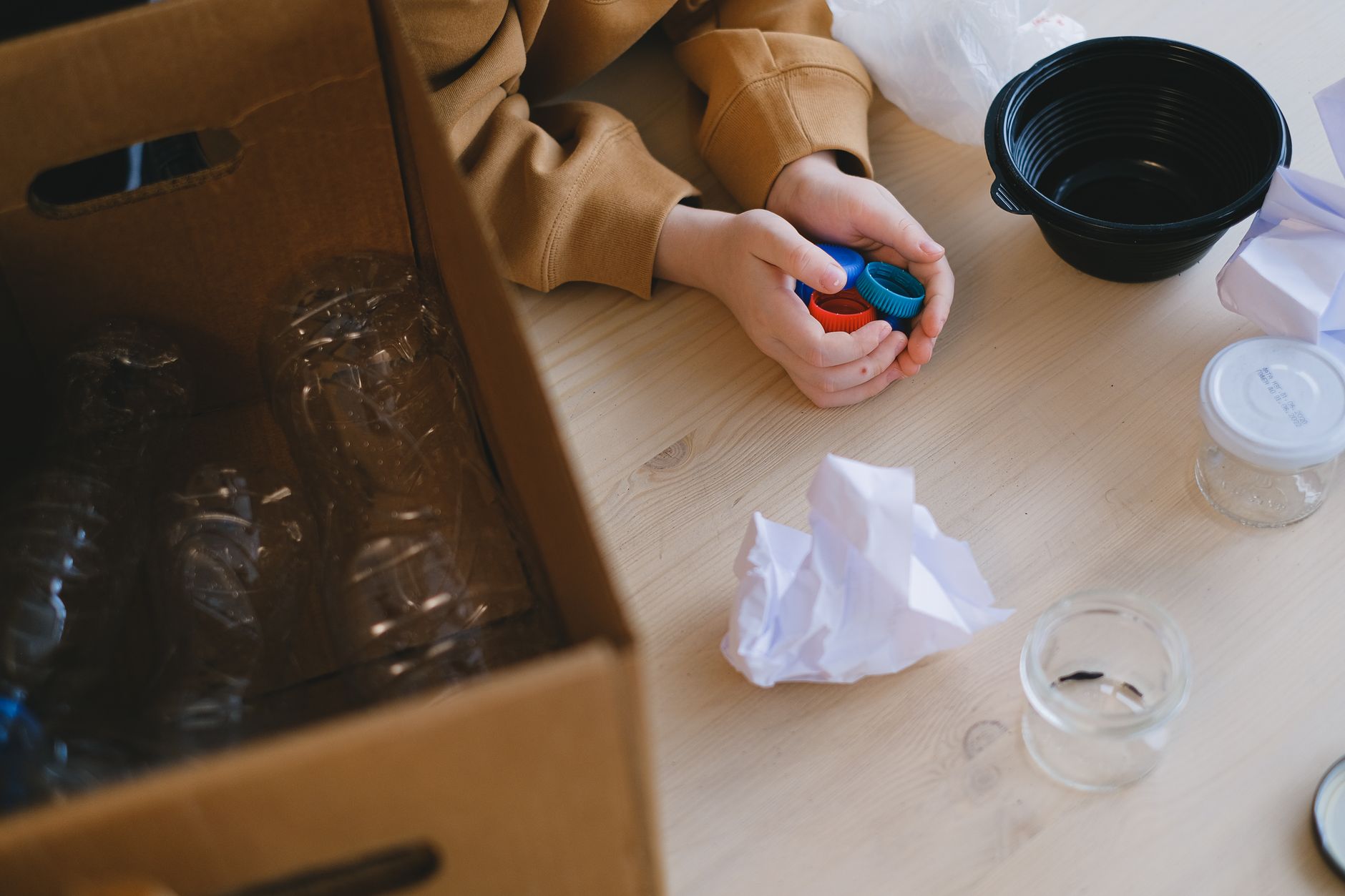
Unpacking groceries together gives you a chance to show your kids just how much packaging comes into your home. As you put groceries away, ask your kids to look at the materials that come with different products.
Pick one item and examine it together. Ask whether your family can reuse any part of it and whether your local recycling program accepts the remaining material.
Look Beyond the Recycling Symbol
Children may assume that every package displaying a recycling symbol belongs in the recycling bin. Explain that the symbol alone doesn’t guarantee local acceptance. Checking the guidelines together helps your kids make better sorting decisions and keeps unsuitable materials out of the recycling bin.
6. Turn New Toys Into Recycling Lessons
You don’t need to schedule a formal lesson every time you want to reinforce good recycling habits. You can reinforce what your kids have learned during activities they’re already doing. For example, after your kids open a new toy, ask them to help sort the packaging instead of throwing it all away.
Have your kids check whether the cardboard box belongs in your household recycling bin. If the packaging contains different materials, help your kids sort each piece according to your local recycling guidelines.
You can also use this opportunity to explain what happens after the recycling truck collects your household materials. If your child wonders where everything goes, explain that recycling facilities separate accepted materials by type before sending them off to become new products. Keep the conversation casual and encourage your child to ask questions about what happens along the way.
7. Give Kids Ownership of a Daily Habit
The most useful recycling lessons continue after the craft supplies disappear. Once your kids understand the basics, give them a small recycling responsibility they can handle on their own.
A younger child might help carry clean paper packaging to the correct bin. An older child could check whether containers need emptying before your household’s scheduled collection day.
Teaching your kids about recycling doesn’t require a perfect household routine. The next time your child asks whether something belongs in the trash, invite them to investigate the answer with you. Their questions might lead to conversations you hadn’t expected, giving you another opportunity to encourage their curiosity about the world around them.


